1 Corinthians 7
 This chapter is made possible by JL Group
The Text
Paul answers questions the Corinthians had sent him about marriage and singleness. He tells married couples not to withhold themselves from each other, urges the unmarried and widowed to remain as he is if they can, forbids divorce among believers, gives guidance for mixed marriages, and repeatedly returns to a striking refrain: stay where you were called, because the form of this world is passing away.
The Core
Underneath all the practical instructions runs one nerve: your marital status is not your identity, and it is not your salvation. Paul relativizes something the ancient world absolutized (marriage and children as the measure of a life) and something we tend to absolutize too (romantic fulfillment). He does not despise marriage; he refuses to worship it. What matters is undivided devotion to the Lord in the short time that remains. Both singleness and marriage are legitimate callings, both come with their own weight, and neither is a spiritual upgrade. That is more radical than it sounds, because it means your deepest longing is not meant to be filled by a person.
The Common Thread
Paul writes with an urgent eschatological clock ticking: "the time is short," "the form of this world is passing away." That is not doom-mongering, it is Easter logic. Because Christ is risen and will return, every earthly arrangement, including the most beautiful ones, has become penultimate. This is why he can say "those who have wives should be as though they had none," a jarring line that echoes Jesus' own strange word about hating father and mother. The old order, in which lineage and marriage secured your place in God's people, has been broken open. In Christ, the celibate is not a failure and the married are not more blessed. The single Jesus and the single Paul both testify that a full human life does not require a spouse.
The Mirror
If you are married, ask honestly: do you use "spiritual reasons" to withdraw from your spouse, sexually, emotionally, practically? Paul is blunt: your body is no longer only yours. That cuts against both the modern gospel of self-fulfillment and the pious impulse to make holiness look like distance. If you are single, do you carry singleness as a defect, a waiting room, a shame? Paul refuses to let you see it that way, but he also refuses cheap comfort: he acknowledges the fire of desire and does not shame those who marry because of it. And if you are divorced, or married to someone who does not believe, read verses 12 to 16 slowly. Paul does not tell you to flee for the sake of your own purity. He tells you your presence sanctifies. That is a heavier and more hopeful word than most sermons give you.
The Detail
Verse 5 is easy to skip: agree together, for a limited time, for prayer, then come back together. Notice what Paul assumes. Sexual intimacy in marriage is normal, expected, mutual, and its interruption is the exception that needs justification, not the rule. He assumes couples might try to be extra spiritual by abstaining, and he warns against it. Piety that harms your spouse is not piety. The word for "defraud" in verse 5 is the same kind of word used for economic robbery: withholding your body is stealing. That should unsettle anyone who has quietly weaponized headaches, exhaustion, or spirituality against a spouse.
The Question
Does Paul actually think singleness is better? Verses 32 to 35 seem to say yes. And this grates, because most of us have been taught that marriage is the norm and singleness the detour. Paul reverses the picture: the married person is inevitably divided, pulled between pleasing the Lord and pleasing a spouse, and that is not a moral failure but a real cost. He does not resolve this tension. He does not say marriage is second-class, but he does say it is more complicated. Sit with the discomfort. Perhaps the church has spent so long defending marriage that it has forgotten to honor the unmarried life Jesus himself lived.
The Main Character
Paul writes as a man who has clearly thought about his own body, his own loneliness, his own choices. He is not a disembodied theologian dispensing rules; he distinguishes carefully between "I say, not the Lord" and "the Lord commands," which shows a pastor aware of his authority and its limits. He speaks with tenderness to widows, with realism to those burning with desire, with firmness to those tempted to leave unbelieving spouses. What emerges is a man who has made his peace with singleness, who does not romanticize it, who wants others to be free from anxiety, and whose deepest concern is not sexual ethics but undivided attention to Christ in a world running out of time.
Reflection
Where in your marriage or singleness have you made an idol of what Paul calls penultimate, and what would it look like to loosen that grip this week?
If "the form of this world is passing away," which current worry or longing shrinks when you actually believe that?
Go deeper in 1 Corinthians
Hand picked books that unpack this Bible book further.

A daily Advent devotional for December 1 to 25, guided by the book of Luke. Twenty-five readings trace one promise from David's tent to the manger,...
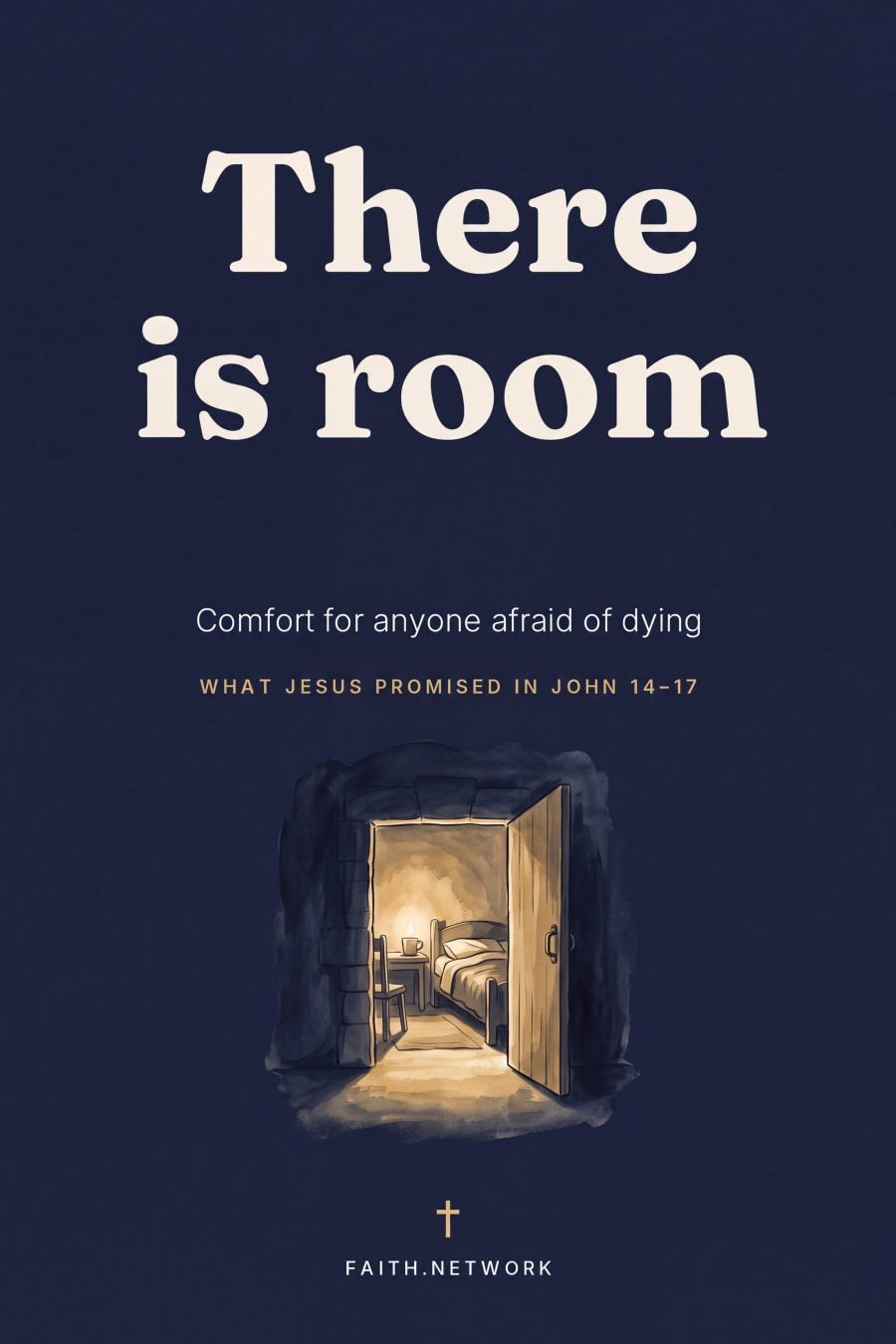
On the night before He died Jesus told frightened friends He was going first and there would be room. Fourteen short chapters on John 14-17 for any...

Church problems, cross shaped answers: Corinth feels very modern.

Paul For Everyone: 1 Corinthians
Wright's readable guide through love, gifts and resurrection.

1 Corinthians: An Introduction and Commentary
A trusted Tyndale commentary: compact, careful and clear on every passage.

Faith.network earns a small commission on Kobo purchases made through these links, at no extra cost to you. It helps keep the studies free.
Frequently asked questions about 1 Corinthians 7
Quick answers to the most common questions about this Bible passage.
What does 1 Corinthians 7 mean?
What is 1 Corinthians 7 about?
What is the historical context of 1 Corinthians 7?
What does 1 Corinthians 7 teach us about God's character?
How is 1 Corinthians 7 still relevant today?
 JL Group
What the community shares on 1 Corinthians 7
Insights, prayers and thanksgivings from readers and the editorial team on this passage.
The time is short," Paul writes, and then says the strangest thing: live as though you had no wife. He isn't cooling your love. He's loosening your grip. Even the best gift was never meant to be your anchor. So ask yourself honestly: what are you holding so tightly that losing it would feel like losing God?
Father, so much pulls at me, and my attention scatters before the day even starts. You don't tie me down with rules; you free me to be near you. Help me set aside what divides my heart, and give me a settled, undistracted love for you.
For the mode of this world passes away." Paul isn't telling you to hate the house, the job, the ordinary joys. He's telling you to hold them like something borrowed. Use the world, yes. Just don't sink your anchor into scenery that's already being carried off the stage. What are you gripping so tightly that losing it would feel like losing God?
Father, I keep measuring my life against someone else's, as if their path were the only good one. Remind me that what you've placed in my hands is yours, given on purpose. Help me live this season well, without envy.
Explore this passage at a different level
Beginner, theologian, or a different reading length? Adjust the settings and generate your own version.
Open in the study tool

 Philippines
 Nigeria
 Zimbabwe
 India
India
 Zambia
 South Africa

 Malawi
 Kenya
Kenya

 Indonesia




 DR Congo
 Ghana
Ghana
 Nepal
Nepal

 Cameroon







 Mozambique

 Benin
Benin














