2 Timothy 2
 This chapter is made possible by JL Group
The Text
Paul writes from prison to Timothy, his younger co-worker, and hands him a torch: pass on what you have heard, endure like a soldier, an athlete, a farmer, and remember Jesus Christ risen from the dead. Around Timothy, teachers are twisting the gospel, especially the claim that the resurrection has already happened. Against that erosion Paul sets a granite sentence: "God's firm foundation stands." From that foundation flows a life that flees empty lust and quarrels, and pursues righteousness with a pure heart.
The Core
The theological pulse of this chapter beats in verse 13: "If we are faithless, he remains faithful; for he can't deny himself." Everything else hangs on this. God's faithfulness is not a mood or a policy; it is his very being. He cannot betray himself, therefore he cannot ultimately betray his own. This is why Paul can sit in chains and still say "God's word isn't chained." The gospel does not depend on Paul's freedom, Timothy's courage, or the church's performance. It rests on the character of God, who has bound himself to us in Christ. Grace, then, is not a spiritual mood-lifter but the load-bearing wall of reality.
The Common Thread
Notice how Paul compresses the whole gospel into one line: "Remember Jesus Christ, risen from the dead, of the offspring of David." Two horizons meet here. "Offspring of David" reaches back into the covenant with a shepherd-king, the promise that from that line a ruler would come whose kingdom does not end. "Risen from the dead" is the moment where that promise breaks through the ceiling of death itself. Between these two phrases lies the entire arc of Scripture: God's covenant faithfulness that refused to die when Israel died, refused to end when the Messiah was killed. The seal on God's foundation, "The Lord knows those who are his," echoes Numbers, where God knew Moses by name. Election is not a cold decree; it is a Shepherd who knows his sheep.
The Mirror
Paul does not let us stay in abstractions. He names the vessels of gold and clay in the same house, and then makes it personal: purge yourself, flee youthful lusts, refuse foolish quarrels. That last one may sting more than the first. How much of our spiritual energy leaks into arguments that "generate strife" but produce nothing? Online debates, theological point-scoring, the small tyrannies of being right at the dinner table. Paul says: this rots the hearer like gangrene. And notice what he prescribes instead, not withdrawal but pursuit: righteousness, faith, love, peace, and this "with those who call on the Lord out of a pure heart." Holiness here is not solitary. It is a company you keep.
The Profile
Timothy was young, probably in his thirties, leading a church in Ephesus where older men resisted him and false teachers were gaining traction. Paul, his mentor, was in a Roman prison awaiting likely execution. When Timothy read "endure hardship as a good soldier," he did not hear inspirational poster material; he heard the sound of his own future. Roman soldiers left family and property behind for years. Athletes trained for ten months under strict rules before games. Farmers waited seasons for harvest. Every image speaks of delayed reward and present cost. The first hearers would have understood immediately: following this crucified-and-risen Christ means your payoff is not now. And that was, for them, both sober and strangely liberating.
The Intertext
Verse 19 quotes two lines. "The Lord knows those who are his" comes from Numbers 16, when Korah's rebellion threatened Moses' leadership and God distinguished the true from the false. Paul pulls that ancient scene into Ephesus: God still separates. The second line, "Let every one who names the name of the Lord depart from unrighteousness," echoes the prophets' constant demand that the covenant name be matched by covenant living. And the trustworthy saying in verses 11 to 13 leans against Romans 6: dying with Christ, living with Christ. But Paul adds something sharper. Denial has consequences ("he also will deny us"), yet faithlessness meets not denial but divine faithfulness. The line between the two is one of Scripture's mysteries.
The Question
How can verse 12 and verse 13 both be true? "If we deny him, he also will deny us," and one breath later, "If we are faithless, he remains faithful." Are these not contradictions? Not quite, but they are not easily harmonized either. Denial seems to be a settled, final turning away, what Peter almost did and repented of. Faithlessness may be the wobbling, doubting, stumbling faith that still, however weakly, belongs to him. But Paul does not draw the line for us. He leaves us in the tension: God is not mocked, and God cannot deny himself. Both are true. The believer lives inside that tension, not above it.
Reflection
Where in your life are you spending energy on "arguing about words" instead of pursuing righteousness with those of a pure heart?
What does it mean for you today that God's word isn't chained, even when your circumstances are?
Go deeper in 2 Timothy
Hand picked books that unpack this Bible book further.

A daily Advent devotional for December 1 to 25, guided by the book of Luke. Twenty-five readings trace one promise from David's tent to the manger,...
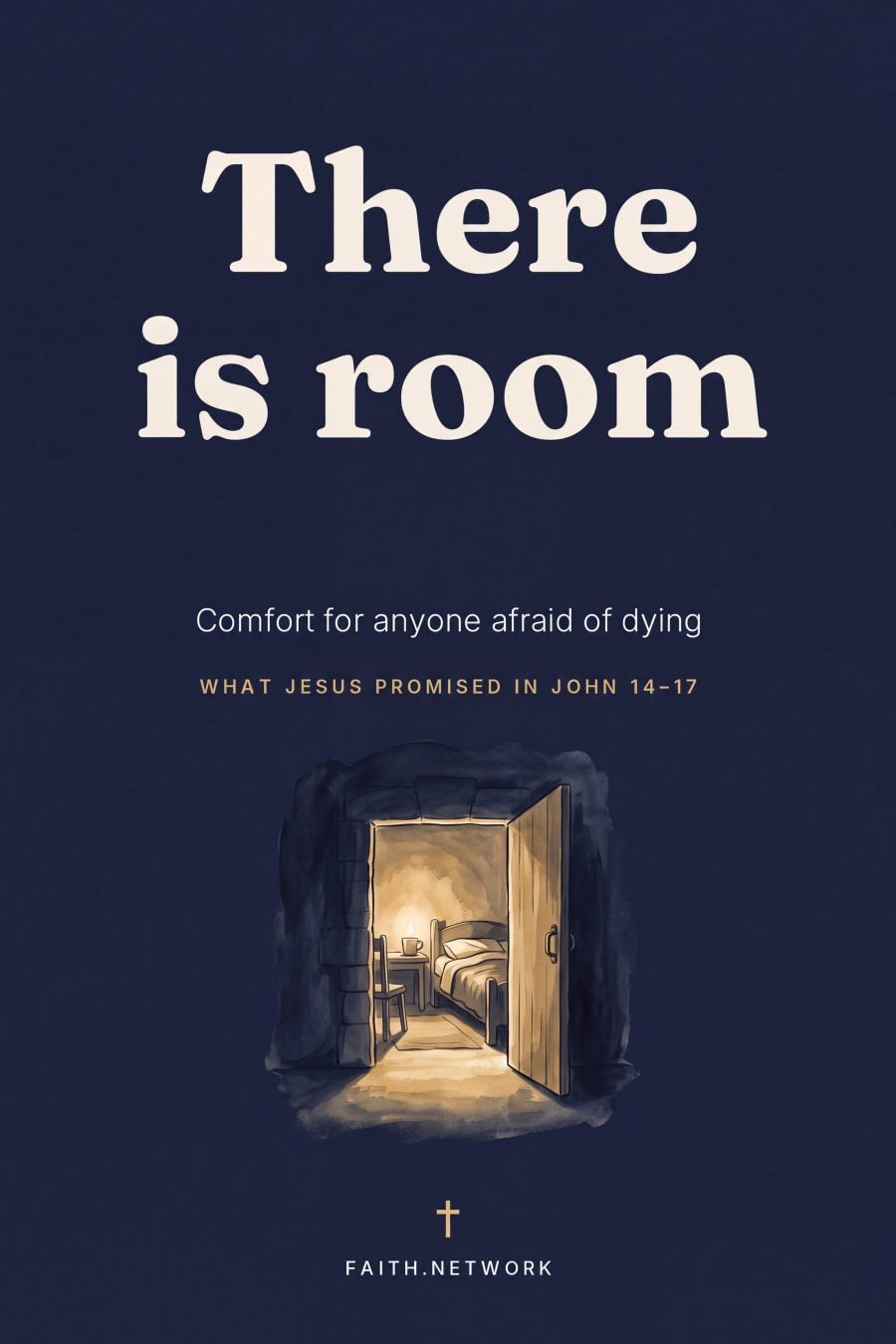
On the night before He died Jesus told frightened friends He was going first and there would be room. Fourteen short chapters on John 14-17 for any...

Paul's final letter: guarding the gospel and finishing the race.

Paul For Everyone: The Pastoral Letters
Timothy and Titus in Wright's accessible daily format.

The Pastoral Epistles: An Introduction and Commentary
A trusted Tyndale commentary: compact, careful and clear on every passage.
Faith.network earns a small commission on Kobo purchases made through these links, at no extra cost to you. It helps keep the studies free.
Frequently asked questions about 2 Timothy 2
Quick answers to the most common questions about this Bible passage.
What does 2 Timothy 2 mean?
What is 2 Timothy 2 about?
What is the historical context of 2 Timothy 2?
What does 2 Timothy 2 teach us about God's character?
How is 2 Timothy 2 still relevant today?
What the community shares on 2 Timothy 2
Insights, prayers and thanksgivings from readers and the editorial team on this passage.
If we are faithless, he remains faithful. He can't deny himself." Notice where Paul anchors it. Not in your grip on God, but in God's inability to stop being who He is. On the morning your prayers feel hollow and your faith thin as paper, He has not changed. He cannot. That is the only ground that holds.
Paul is chained in a cell, near the end, and what he hands Timothy is not a building or a fund but a trust: "commit the same things to faithful men who will be able to teach others also." Four generations in one sentence, and the only qualification is faithfulness. Not gifted. Not impressive. Faithful. Who taught you? And who is quietly watching you now?
Paul says of empty talk, "their word will consume like gangrene." Gangrene doesn't announce itself. It spreads quietly while you still feel fine. That's what makes his warning so uncomfortable. The conversations that slowly poison us rarely feel dangerous at the time. They feel interesting. Which one are you feeding?
For if we died with him, we will also live with him." Notice the tense. Not if we will die someday, but if we died. Something has already happened to you. Paul writes this while chained like a criminal, and still calls the saying trustworthy. The hardest part is behind you. The living is what's still coming.
Explore this passage at a different level
Beginner, theologian, or a different reading length? Adjust the settings and generate your own version.
Open in the study tool

 Philippines
 Nigeria
 Zimbabwe
 India
India
 Zambia
 South Africa

 Malawi
 Kenya
Kenya

 Indonesia




 DR Congo
 Ghana
Ghana
 Nepal
Nepal

 Cameroon







 Mozambique

 Benin
Benin














