Acts 16:31
The Text
A jailer, shaken by an earthquake and by the strange calm of two prisoners who did not flee, falls at their feet and asks how he can be saved. Paul and Silas answer: "Believe in the Lord Jesus Christ, and you will be saved, you and your household." One sentence, spoken in the dark, to a man still holding a sword he almost turned on himself.
The Core
Notice what is not said. Paul does not hand him a moral checklist, does not ask about his Roman loyalties, does not first sort out his past. He gives him a person to believe in. Salvation here is not primarily a formula but a fastening of the whole self to Jesus Christ as Lord. And yet, how quickly we hollow this out. "Just believe" can become a slogan, cheap and thin. But the jailer's belief was not thin: it cost him his career trajectory, probably his social standing, and reshaped his household by morning. To believe in the Lord Jesus is to hand over the keys of the house, literal and interior. That is why the promise is so weighty. It rests entirely on who Jesus is, not on how well the jailer will perform tomorrow.
The Common Thread
This scene sits in a long line. From Abraham, whose belief was reckoned to him as righteousness, through Israel told to trust rather than trust in chariots, to the thief on the cross who simply says, "Remember me." The pattern holds: God saves those who lean their weight on him. What is new here is the name. The vague "God of our fathers" has a face, a voice, a resurrection. When Paul says "the Lord Jesus Christ," he is placing this trembling Roman jailer in the same story as Abraham, but through the crucified and risen One who now carries the covenant. The household detail also echoes ancient patterns: God's grace has always moved through families, not around them, though each person must eventually own it.
The Mirror
There is a temptation, especially for those of us who have read this verse many times, to hear it as a starter's verse, something for beginners, and to move on. But sit with it. When was the last time you were as desperate as this jailer? When did salvation feel like something you needed by morning, not something you already had filed away? Most of us live somewhere between his panic and Paul's peace, dulled to both. The verse also confronts our management instincts. We want more steps, more control, something to do. "Believe" feels too exposed, too dependent. And what about your household, the people whose lives are woven into yours: are you carrying them in prayer as though their salvation, too, hangs on this same Lord?
The Intertext
Compare Romans 10:9, written by the same Paul: "If you confess with your mouth Jesus as Lord and believe in your heart that God raised him from the dead, you will be saved." The same twin move: Lord and belief. But hear the contrast with James 2:19: "Even the demons believe, and shudder." Belief that saves is not intellectual assent but personal entrustment, the kind that gets up in the middle of the night to wash the wounds of the men who just told you the gospel, as the jailer does in the next verse. Scripture will not let us pull "believe" loose from the life that follows it.
The Detail
"You and your household." Four words we tend to skim. In the Roman world a household was not just family but slaves, workers, dependents, a small economy. Paul does not say the jailer's faith automatically saves everyone under his roof, as if by osmosis. But he does say the promise reaches that far. The gospel does not stop at the individual soul; it moves out through relationships, structures, tables. In an age that reads everything through the private self, this phrase pushes back. Your believing matters to more people than you. And the salvation offered is not smaller than the household you already carry on your shoulders.
The Profile
The first hearers of Acts were largely Gentile Christians in a Roman world, many of them from mixed households, some of them slaves, some of them heads of houses. When they heard about this jailer, a man of the empire, an enforcer, they heard their own story. If he could be saved with his whole house, so could the merchant in Ephesus, the freedwoman in Corinth. The verse functioned as a door held open. It also quietly subverted the imperial claim that Caesar was Lord and savior. Paul offers a different Lord, one who saves not by conquest but by being trusted, in the dark, by a broken man on the floor of his own prison.
Reflection
Where in your life are you still trying to add something to "believe in the Lord Jesus," as if his name were not enough?
Who in your household, in the wider sense, are you carrying before God, and what would it look like to entrust them to this same Lord tonight?
Go deeper in Acts
Hand picked books that unpack this Bible book further.

A daily Advent devotional for December 1 to 25, guided by the book of Luke. Twenty-five readings trace one promise from David's tent to the manger,...
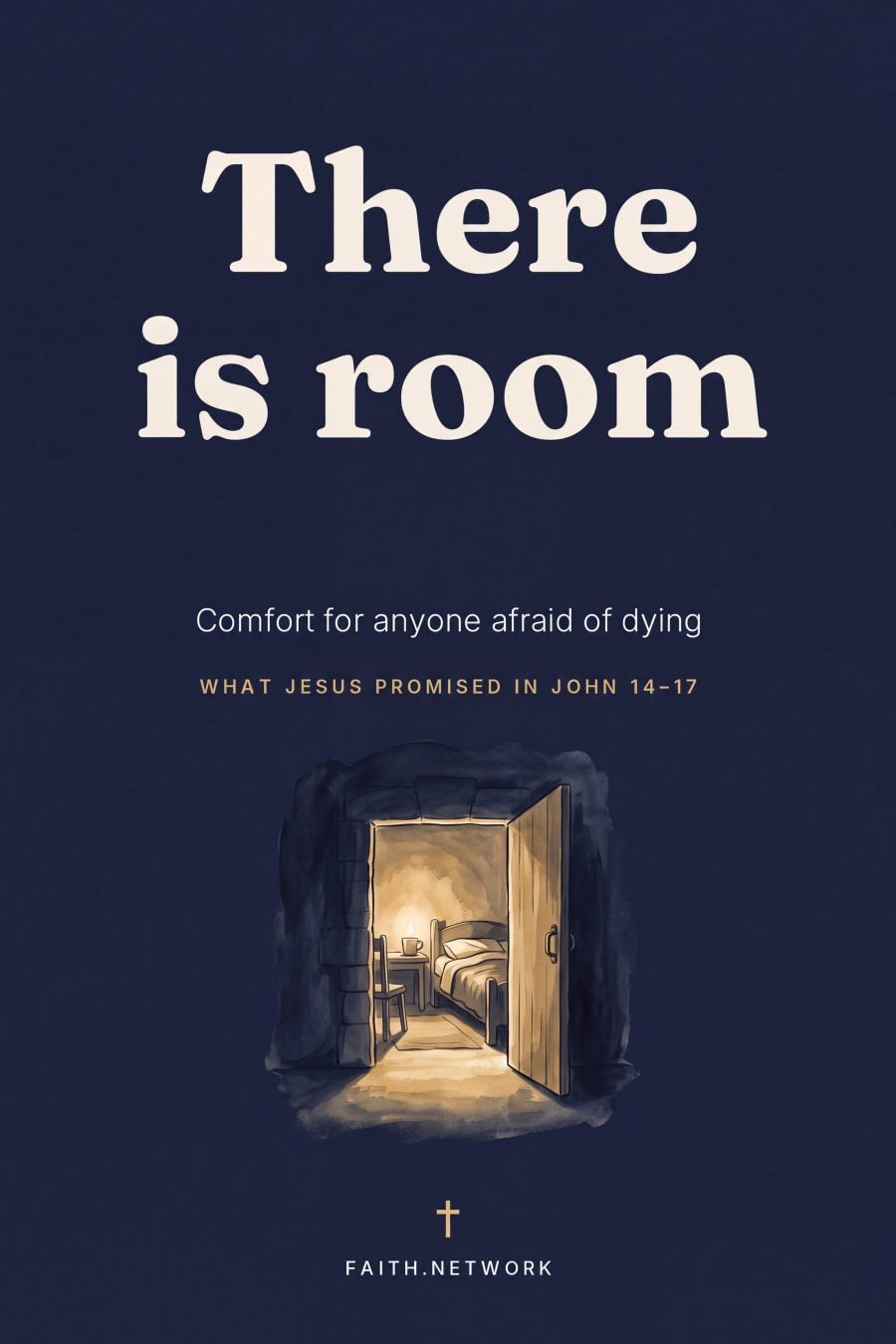
On the night before He died Jesus told frightened friends He was going first and there would be room. Fourteen short chapters on John 14-17 for any...


The church's explosive beginnings, explained with energy and care.

Acts: An Introduction and Commentary
A trusted Tyndale commentary: compact, careful and clear on every passage.

Faith.network earns a small commission on Kobo purchases made through these links, at no extra cost to you. It helps keep the studies free.
Frequently asked questions about Acts 16:31
Quick answers to the most common questions about this Bible passage.
What does Acts 16:31 mean?
What is Acts 16:31 about?
What is the historical context of Acts 16:31?
What does Acts 16:31 teach us about God's character?
How is Acts 16:31 still relevant today?
 JL Group
What the community shares on Acts 16
Insights, prayers and thanksgivings from readers and the editorial team on this passage.
Father, you shook a prison at midnight and the chains simply fell. I have places in me that feel locked tight, habits and fears I can't open on my own. Come and shake what needs shaking. Set me free, and help me stay long enough to see who else you're freeing.
Passing by Mysia, they came down to Troas." One short line for days of walking. No miracle, no sermon, just dust and tired feet after two closed doors. Troas was the coast, the end of the road, the place where you cannot go further by land. And there the vision came. Your in-between may be taking you somewhere too.
Hours before, he held the keys. Now he sets the table. "He brought them up into his house, and set food before them, and rejoiced greatly, with all his household, having believed in God." Still the middle of the night, prison walls cracked open, and a jailer is passing bread to the men whose backs he had locked away. Who would you struggle to feed?
Father, I don't always notice the call in front of me. Give me eyes for the people quietly asking for help, and courage to go where you point, even when it means leaving my plans behind. Make me quick to say yes.
Explore this passage at a different level
Beginner, theologian, or a different reading length? Adjust the settings and generate your own version.
Open in the study tool

 Philippines
 Nigeria
 Zimbabwe
 India
India
 Zambia
 South Africa

 Malawi
 Kenya
Kenya

 Indonesia




 DR Congo
 Ghana
Ghana
 Nepal
Nepal

 Cameroon







 Mozambique

 Benin
Benin














