Hebrews 8
 This chapter is made possible by JL Group
The Text
The writer says something remarkable: we have a High Priest who sits at God's right hand, serving in the true sanctuary that the Lord pitched, not man. The old covenant with its priests and gifts was a shadow of the heavenly. And then comes the long quotation from Jeremiah 31: God will make a new covenant, not like the one Israel broke, but one where his laws are written on hearts and minds, where everyone knows him from the least to the greatest, and where sins are remembered no more.
The Core
The heart of chapter 8 is a transfer of location. Religion no longer runs primarily through an external system, temple, altar, rules on stone tablets, but through the inner person. God writes his instructions on hearts. That sounds warm, but read it ethically and it becomes sharp: the excuse "I did not know" or "no one told me" collapses. Under the new covenant you carry the knowledge of God in you. Not as a vague conscience, but as something God himself inscribed through his Spirit. This means every ethical choice, how you speak of a colleague, what you do with your money, whether you keep your word, is no longer a matter of external checking but of interior truthfulness before a God who is already inside.
The Common Thread
Jeremiah spoke his words to a people whose temple was about to fall. Everything visible that held their faith together was going to collapse. God promised then: I will do it differently, deeper, more indestructibly. Hebrews says that promise landed in Christ. His priesthood does not operate from a stone building but from heaven itself, and his sacrifice does not need repetition. This is not a rejection of the Old Testament, the writer quotes it at length, but a claim that everything the tabernacle was pointing toward has now arrived. The shadow served its purpose; the body that cast it stands now in the light.
The Mirror
If God's law is written on your heart, then your ethics can no longer hide behind rules. You know when you cut someone off in a meeting to look better than they do. You know when the extra hour at work is really about running from your family. You know when that purchase is soothing a wound instead of meeting a need. Under stone tablets you could keep score: did I steal, no, did I murder, no, done. Under a covenant written inward, the standard is what you already sense before you push it away. This text does not comfort the person who wants a manageable religion. It comforts the person who is tired of pretending and who longs to be truthful all the way down.
Context
Hebrews was written to Jewish believers under pressure, probably before the temple's destruction in 70 AD, when the sacrificial system was still functioning daily in Jerusalem. Priests slaughtered, blood was sprinkled, incense rose. To leave that behind for a crucified Messiah felt to many like abandoning the concrete for the abstract. The writer counters this fear head on: what you left is the copy, what you have gained is the original. The tabernacle Moses built followed a pattern shown on the mountain. Christ serves in the mountain itself. The readers were being tempted back into the visible; the writer keeps pointing them upward.
The Profile
The first hearers heard something we easily miss. When Jeremiah said "they broke my covenant, though I was a husband to them," they heard covenant infidelity as marital betrayal. They knew the pain of exile, of watching their grandparents lose everything because the nation could not keep faith with God. The promise that God would write his law inward was not sentimental to them, it was the answer to a centuries-long failure. And "I will remember their sins no more" was not cheap grace; it was the release from a shame their history had branded into them. For them this text meant: God is going to succeed where we kept failing, and he will do it in us.
The Detail
Notice the phrase "from the least of them to the greatest of them, they will all know me." In the old system, knowledge of God concentrated in the priests. Ordinary people depended on mediators to tell them what God said. The new covenant flattens this. The cleaning woman knows God as directly as the theologian. The teenager in the youth group has access as real as the pastor. Ethically this changes how we treat one another in church. No one is a spectator to someone else's spirituality. No one is beneath receiving God's word for themselves. The person you find least impressive on Sunday morning may be hearing God more clearly than you this week.
Reflection
Where in your life are you still living by external checklists rather than by what God has already written on your heart?
Whom do you treat as "least" in the community, and what would change if you believed God speaks to them as directly as to you?
Go deeper in Hebrews
Hand picked books that unpack this Bible book further.

A daily Advent devotional for December 1 to 25, guided by the book of Luke. Twenty-five readings trace one promise from David's tent to the manger,...
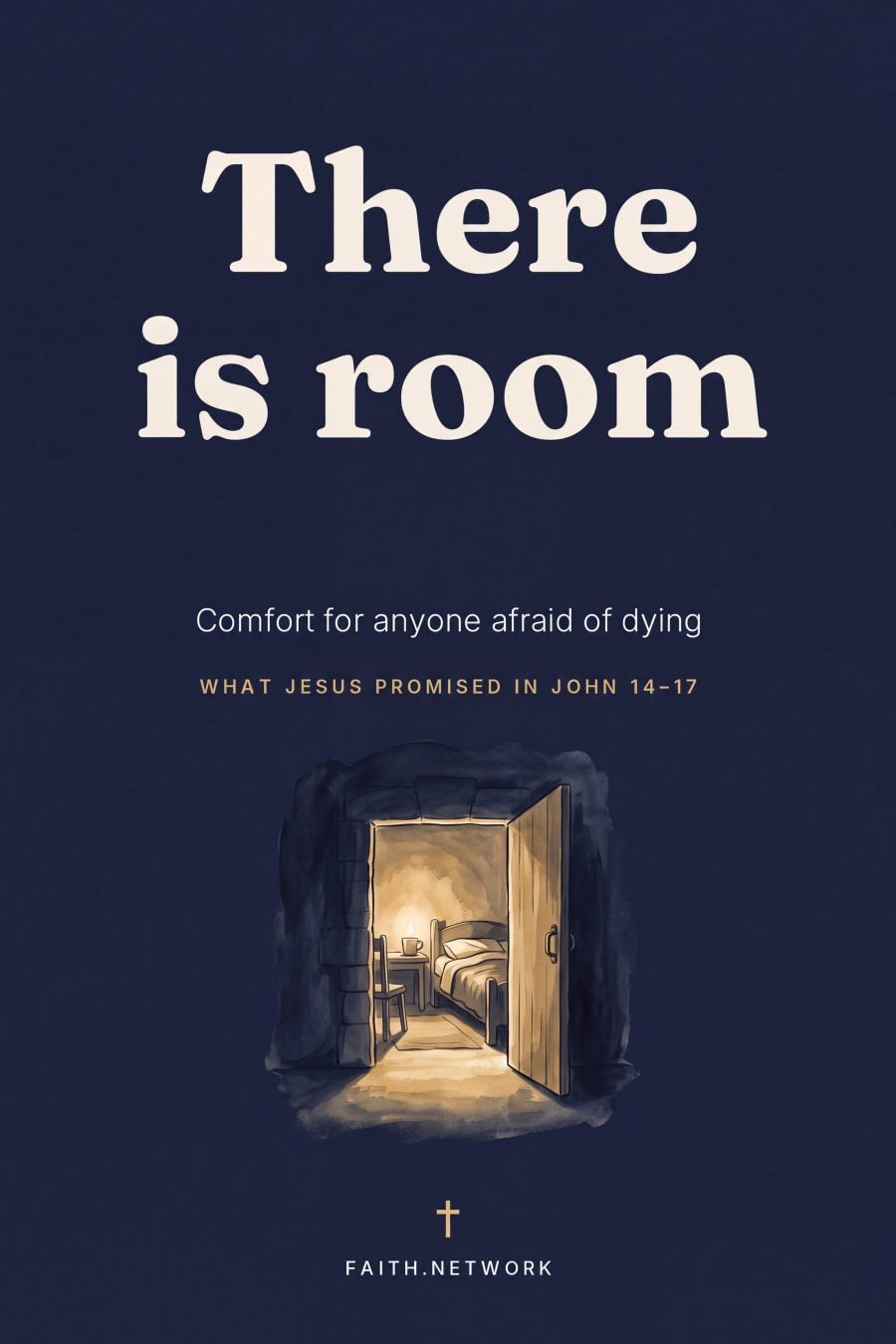
On the night before He died Jesus told frightened friends He was going first and there would be room. Fourteen short chapters on John 14-17 for any...


Hebrews: An Introduction and Commentary
A trusted Tyndale commentary: compact, careful and clear on every passage.


Faith.network earns a small commission on Kobo purchases made through these links, at no extra cost to you. It helps keep the studies free.
Frequently asked questions about Hebrews 8
Quick answers to the most common questions about this Bible passage.
What does Hebrews 8 mean?
What is Hebrews 8 about?
What is the historical context of Hebrews 8?
What does Hebrews 8 teach us about God's character?
How is Hebrews 8 still relevant today?
What the community shares on Hebrews 8
Insights, prayers and thanksgivings from readers and the editorial team on this passage.
We have such a high priest, who sat down on the right hand of the throne of the Majesty in the heavens." Notice he sat down. Priests stood for years, always another sacrifice to offer, never finished. Your High Priest is seated. The work for you is done. So why do you still stand there, trying to add something?
Father, thank you that Jesus doesn't stand in any earthly line of priests, offering what the law already required. He serves in a greater place, on my behalf, right now. When I'm tempted to earn my way to you, remind me that he has already carried me there.
All will know me, from their least to their greatest." The servant girl knows him as truly as the priest does. No one in this covenant lives on borrowed faith, handed down from a parent's prayers or a preacher's sermon. God promised to be known by you, personally. When did you last speak with him yourself, not just about him?
For if that first covenant had been faultless, then no place would have been sought for a second." Read on and you find where the fault lay: not in the law, but in us. We could not keep it. So God did not hand you a stricter list. He promised to write his law on your heart. Rules press from outside. Only love rewrites you from within.
Explore this passage at a different level
Beginner, theologian, or a different reading length? Adjust the settings and generate your own version.
Open in the study tool

 Philippines
 Nigeria
 Zimbabwe
 India
India
 Zambia
 South Africa

 Malawi
 Kenya
Kenya

 Indonesia




 DR Congo
 Ghana
Ghana
 Nepal
Nepal

 Cameroon







 Mozambique

 Benin
Benin














